Contractor onboarding is the process of integrating contractors into a company's operational framework. This process encompasses various stages, from orientation to the full assimilation of the contractor into the company's workflow. Contractor onboarding is designed to ensure that contractors can perform their tasks effectively while aligning with the company’s standards and culture. It requires a tailored approach that considers the unique nature of freelance work and contractual agreements. By understanding what constitutes effective contractor onboarding, companies can facilitate seamless collaboration and optimize productivity.
Contractor onboarding is about giving contractors the right tools and information they need for their roles. This includes providing access to essential tools and systems, clarifying project expectations, and ensuring an understanding of company policies and values. Effective contractor onboarding builds competence and trust between contractors and the organisation. As more businesses use flexible workforces, mastering this process is key to staying efficient and reaching goals.
Why is Contractor Onboarding Important in todays Workplaces?
As organizations increasingly rely on flexible workforce models to stay competitive, managing contractors effectively is imperative. Efficient onboarding accelerates project timelines by equipping contractors with the knowledge they need from day one. A well-structured introduction creates a sense of belonging and commitment among contractors who might otherwise feel disconnected due to their temporary status. When contractors are aligned with company values and goals from the get-go, they contribute more meaningfully toward achieving organizational objectives.
Neglecting proper contractor onboarding can be costly and lead to misunderstandings about roles or responsibilities causing delays or even legal issues. A propper onboarding framework mitigates these risks by ensuring that all parties are on the same page regarding deliverables and expectations. Additionally, it enhances the organization's reputation as a preferred place for skilled professionals seeking short-term engagements—attracting top talent eager to contribute their expertise without unnecessary hurdles. Essentially mastering contractor onboarding not only safeguards operational efficiency but also propels businesses toward sustained growth in an ever-evolving marketplace.
View Templates, Check Lists and Forms
What Does Onboarding look like for the Contractor?
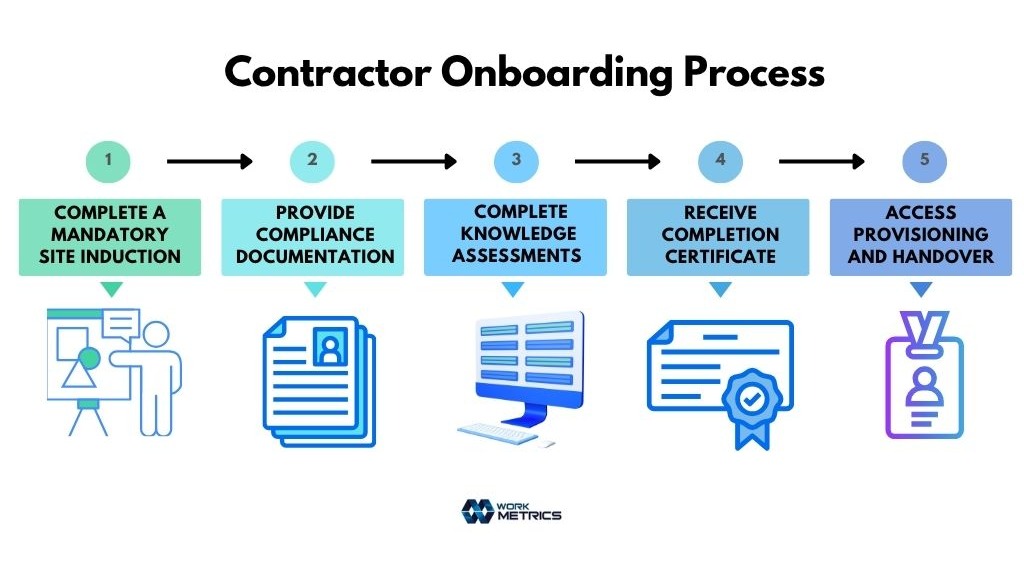
Completing a Mandatory Site Safety Orientation Contractors begin with a safety orientation that introduces key site rules, emergency procedures, and safety expectations. This step ensures everyone understands their responsibilities and the importance of maintaining a safe work environment.
Providing Contractor Compliance Documentation Contractors are required to submit essential compliance documents — such as licenses, insurances, and qualifications — to verify they meet your organisation’s standards and legal obligations.
Completing Knowledge Assessments and Verification Knowledge checks help confirm the contractor’s understanding of company policies, procedures, and safety requirements. This step provides assurance that all critical information has been understood before work begins.
Being issued an Onboarding Completion Certificate Once all onboarding steps are successfully completed, contractors receive an official certificate as confirmation of compliance and readiness to commence work.
Gaining Access Provisioning and Resource Handover Finally, contractors are granted site or system access and provided with the tools, contacts, and resources they need to perform their role effectively from day one.
What Does Onboarding look like for a Business Owner?
Defining Your Compliance Requirements Identifying and documenting all mandatory legal, industry, and organizational requirements such as safety regulations, certifications, insurances.
Centralizing Documentation & Verification Utilize a centralized system where contractors can easily submit all required documents to establish an auditable process for verifying and approving documents.
Developing Safety Training Compile site-specific training modules. Use clear, engaging formats that demonstrate a genuine commitment to their well-being.
Creating Approval Steps and Onboarding Milestones Establishing clear milestones in the workflow that must be completed sequentially including passing and acknowledgment requirements.
Setting the Standard for Site Behaviour Clearly communicate behavioral expectations, site access protocols, and reporting procedures for near-misses or incidents. This collaboration ensures every contractor understands their role in maintaining a shared, safe environment.
Integratating Induction with Site Access Create a schedule for re-verification and reinduction to ensure ongoing compliance and prevents outdated credentials from compromising your safety standards down the line.
Why Contractor Onboarding Matters More Than You Think
Many organisations overlook contractor onboarding—often due to the absence of a structured program or a partially developed process. However, this oversight can come at a high cost.
Without a consistent onboarding approach that helps contractors understand your company’s culture, policies, and expectations, businesses risk higher turnover, lower productivity, and unnecessary expenses. When contractors aren’t properly onboarded, they’re left uncertain about their roles, responsibilities, and the way things are done within the organisation. This confusion can lead to misunderstandings regarding project objectives potentially compromising both wokr quality and timelines.
Ultimately, contractors who feel unsupported or disconnected are more likely to experience stress, reduced motivation, and a diminished sense of belonging—making them more inclined to seek opportunities elsewhere.
How does your Contractor Onboarding process compare?
Create your own custom contractor onboarding workflows:
 Contractor onboarding is the process of integrating contractors into a company's operational framework. This process encompasses various stages, from orientation to the full assimilation of the contractor into the company's workflow. Contractor onboarding is designed to ensure that contractors can perform their tasks effectively while aligning with the company’s standards and culture. It requires a tailored approach that considers the unique nature of freelance work and contractual agreements. By understanding what constitutes effective contractor onboarding, companies can facilitate seamless collaboration and optimize productivity.

 Completing a Mandatory Site Safety Orientation